

 ES
ES  EN
EN 
What Small and Medium Travel Agencies Should Look for When Selecting an ERP Solution
Key Takeaways:
- Unified operations matter: A modern travel ERP platform connects sales, reservations, finance, and customer management in one place.
- Avoid scorecard errors: Multiple disconnected tools increase manual workload and error potential.
- Focus on future‑proofing: Scalability, integrations with suppliers/APIs, and automation are non‑negotiable features for agencies with growth ambitions.
- Travel Booster and industry‑specific ERPs offer functionality tailored to travel workflows, not generic business processes.
In an industry where real‑time responsiveness and operational efficiency determine profitability, travel agencies are increasingly abandoning fragmented spreadsheets and legacy tools in favor of centralized platforms. Recent industry research shows that 70% of travel companies expect to use cloud‑based systems by 2025 to improve scalability and data access across workflows – a shift driven by demands for real‑time inventory sync, financial accuracy, and integrated sales channels.
Despite this momentum, many small and medium travel agencies still depend on disconnected systems, leading to duplication of effort, manual reconciliation errors, and visibility gaps across bookings, customer data, and financials. A typical mid‑sized agency uses an average of seven separate tools, resulting in up to 20% productivity loss just from manual data transfer between systems.
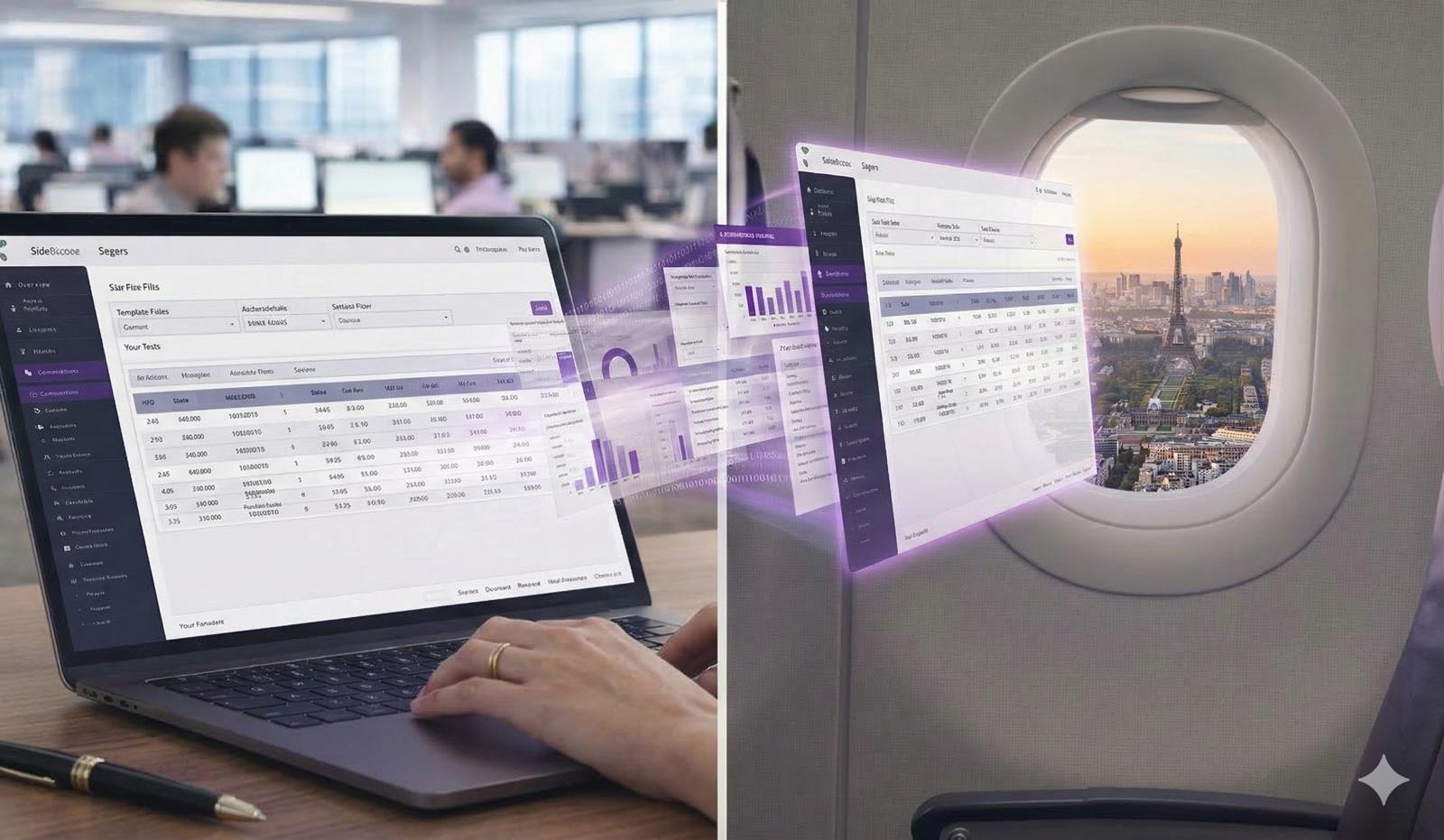
A purpose‑built travel ERP software can transform your agency’s operations by unifying front‑, mid‑, and back‑office processes into a single technology backbone – enabling growth without the overhead of fractured systems.
Understanding the Role of ERP in Travel Agency Operations
A travel agency operating without a unified system must juggle booking engines, CRM tools, accounting spreadsheets, supplier contracts, and reporting platforms; often with inconsistent data and redundant manual work.
A well‑designed travel management system or travel ERP software addresses this by ensuring every functional silo: from customer acquisition to supplier payments – flows through a centralized engine.
Key benefits of unified ERP architecture:
- Real‑time booking: Reduce overbooking and missing confirmations.
- Single source of truth: Financials, customer history, booking status, supplier rates, and commissions are centrally available and auditable.
- Cross-functional automation: Tasks such as invoice generation, bank reconciliation, BSP and ARC reconciliation, supplier reconciliation, commission calculations, and payment reminders move from manual work into automated processes.
ERP platforms bridge the gap between front‑office (CRM, sales), mid‑office (booking operations), and back‑office (finance, compliance) workflows – minimizing fragmentation and accelerating decision‑making based on accurate enterprise‑wide data.
Define Your Agency’s Operational Needs Before Choosing ERP
Selecting the right travel agency software should start with an internal assessment of operational workflows and future goals. Consider the following factors before evaluating specific solutions:
1. Booking Volume and Complexity
Agencies handling high booking volumes and complex itineraries need a system that efficiently manages corporate and private clients, suppliers, and employees across multiple countries, branches, languages, and currencies. It should send automated trip itineraries, real-time updates, and personalized messages throughout the travel journey, support full customization, and enable expansion into new domains such as Leisure, DMC, Outbound Tour Operators, and OTAs. At the same time, it must maintain strict security and compliance standards, including ISO/IEC 27001, ISO/IEC 27017, and GDPR.
2. Reporting and Analytics Needs
Your ERP must offer automated performance reporting, KPI dashboards, and financial insights that save time and provide visibility into sales trends, margin performance, and agent productivity. Decision‑ready data is key, a travel ERP can eliminate manual report compilation and help your leadership act on accurate metrics.
3. Financial Workflows and Compliance
Assess your current processes for accounts receivable/payable, multi‑currency transactions, commission payouts, and tax management. If your agency processes international bookings or variations in tax regimes, look for a system with built‑in accounting automation and compliance tracking, eliminating reliance on external spreadsheets.
4. Scalability and Integration Potential
Plan for growth. Choose a platform that integrates with external reservation APIs, payment gateways, and CRM systems – not a closed solution that traps workflows inside one silo.
5. Cloud Accessibility
Cloud‑based ERP solutions offer universal access, real‑time updates, and lower IT overhead, enabling agents to manage operations from anywhere without localized server maintenance.
Defining your operational requirements upfront ensures you prioritize features that directly impact your day‑to‑day efficiency and long‑term success.
Essential ERP Capabilities for Small and Medium Travel Agencies
Not all travel softwares are created equal. A good travel agency automation software should go beyond simple booking management or CRM modules.
Here are the essential capabilities SMBs should look for:
1. Booking and Reservation Management
A centralized system consolidates all customer information in one place, including services ordered, flight details, and supplier costs, so agencies can track payments, manage supplier invoices, oversee the entire travel workflow, and manage profitability with full oversight and control – all at a glance.
2. CRM and Lead Tracking
Your system should track interactions from lead capture to ticket issuance, maintaining customer history, preferences, and communication logs, to empower personalized service and repeat business.
3. Financial Automation
Full financial control includes automated invoicing, bank reconciliation, accounts payable/receivable tracking, and commission tracking. Systems that connect bookings directly to financial entries reduce the risk of human error and increase financial accuracy.
4. Real‑Time Reporting and Dashboards
Automated reports should be available on demand – including margin analysis, revenue forecasting, and compliance summaries. Advanced ERP solutions generate insights that support strategic planning.
5. Cloud Accessibility & Security
Cloud‑hosted ERPs provide anytime, anywhere access with robust security protocols and uptime guarantees that legacy systems often lack.
These core capabilities ensure that your technology stack isn’t just a digital ledger, but a strategic operational backbone that supports growth.
How Travel Booster ERP Supports Small and Medium Travel Agencies
Travel Booster is designed from the ground up for travel agencies that want to move beyond generic tools and adopt a purpose‑built solution that supports full operational workflow automation.
Here’s how Travel Booster addresses SMB needs:
Centralized Workflow and Unified Data
Travel Booster eliminates data silos by merging booking management, CRM, end‑to‑end financials, and reporting into one system. Instead of updating spreadsheets and toggling between systems, agents work from a single unified platform – increasing speed and data accuracy.
Smart Automation Across Functions
From automated itinerary creation to real‑time supplier rate updates and payment reconciliation, Travel Booster automates routine tasks that otherwise consume valuable staff time – allowing teams to focus on customer service and revenue generation.
Financial Control and Compliance Built In
Unlike standalone booking or CRM tools, Travel Booster’s ERP backbone provides full financial automation. This includes automatic transaction entries, commission management, supplier payouts, and error‑free accounting tied directly to bookings and revenue events.
Scalable and Flexible Architecture
Travel Booster is modular and cloud‑based, providing agencies with the ability to scale up as demand grows. Whether adding more users, integrating new APIs, and even expanding to new service lines such as tour operators enabling them to manage contracts, inventory, and packages. Travel Booster supports growth without requiring a system overhaul.
Industry‑Specific Functionality
Travel Booster isn’t a generic ERP – it is design stems from travel and tourism workflows, ensuring:
- Support for multi‑suppliers
- Itinerary management tied to finance and CRM
- Integrated commission tracking
- Intelligent reporting tailored to travel performance metrics
This industry‑first design means agencies gain both operational efficiency and competitive advantage.
FAQs
What types of travel agencies benefit most from ERP platforms?
Agencies handling frequent bookings, multi‑supplier operations, or international orders benefit most from ERP platforms. Small and medium agencies planning to scale or automate financial workflows, and customer data management will see immediate gains in productivity and operational visibility.
How customizable is travel agency ERP software?
Modern travel ERP systems are modular and highly configurable. Agencies can tailor modules, dashboards, workflows, customize documents, and integrations to their specific business models. API support enables connection to booking engines, CRM tools, payment gateways, and supplier platforms.
What are the risks of operating a travel agency without an ERP system?
Without a unified ERP, agencies face fragmented data, duplicated work, manual reconciliation errors, and blind spots in financial and operational reporting. These challenges can lead to slower response times, booking mistakes, and a lack of strategic insight – ultimately affecting customer service quality, increasing the risk of customer loss, and limiting the agency’s ability to grow.
What is the best travel agency ERP for 2026?
While needs vary by agency size and workflow, solutions that integrate bookings, finance, reporting, and CRM, such as Travel Booster, stand out for SMBs. These platforms support automation, real‑time data, and scalable modules, making them well‑positioned for 2026.
How does travel ERP software support financial control and reporting?
Travel ERP platforms link bookings, supplier payments, invoicing, and revenue recognition within a centralized financial engine. Automated reconciliation and customizable reports give agency owners real‑time insight into profitability, and performance metrics.
- Share:


Let's go for a journey
More Resources
-
Blog
-
Blog
-
Blog