

 EN
EN  ES
ES 
The 6 Best Tour Operator Software in 2026
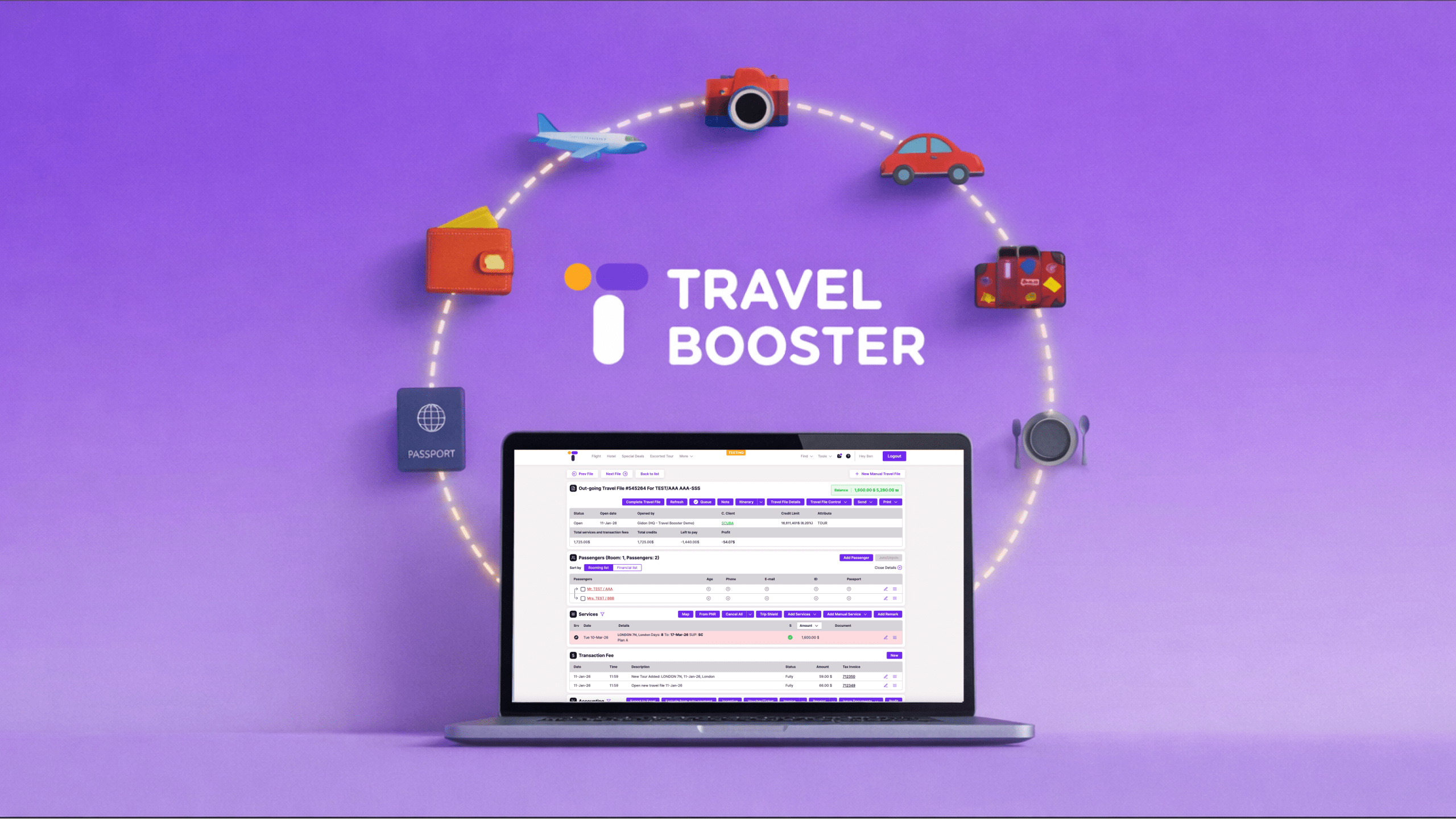
The global travel industry continues to evolve rapidly in 2026. With rising customer expectations, complex supplier networks, and increasing demand for personalized itineraries, tour operators can no longer rely on spreadsheets and disconnected tools. To remain competitive, they need robust, purpose-built software.
In this guide, we explore why specialized tour operator software matters more than ever and review the five best tour operator software solutions in 2026.
Why Tour Operators Need Specialized Software in 2026
Tour operator software is a centralized digital platform designed specifically to help tour operators manage their end-to-end operations – from itinerary planning and pricing to bookings, supplier coordination, and customer communication.
Unlike generic CRM systems or basic booking engines, tour operator software is built to handle the operational complexity unique to the travel industry.
What Tour Operator Software Does
A modern tour operator platform typically supports:
- Itinerary creation – Build detailed, multi-day travel programs with dynamic pricing and supplier integrations.
- Booking management – Track reservations, availability, deposits, and confirmations in one system.
- Pricing and margins – Automate markups, commissions, currency conversions, and cost breakdowns.
- Supplier management – Coordinate hotels, transportation providers, guides, and activity vendors.
- Holiday packaging – Easily set up holiday packages including charter flights, scheduled tours and more.
- Customer communication – Store traveler data, send documents, manage inquiries, and track interactions.
For both inbound and outbound operators, operational complexity continues to grow. An outbound tour operator organizes trips and creates holiday packaging for travelers departing from their home country to international or national destinations. An inbound tour operator, by contrast, manages travel services for international visitors arriving in their destination country. Both models require intricate coordination across suppliers, currencies, time zones, and regulations.
Generic CRM platforms focus primarily on sales tracking and customer pipelines. Booking engines manage reservations. But tour operator software brings these functions together in a single, industry-specific ecosystem.
Key Features to Look for in Tour Operator Software
Here are the most critical features tour operators should prioritize in 2026:
1. Dynamic Itinerary Builder
A drag-and-drop interface with content providers enables the creation of holiday packages by combining external content with in-house content. This is to allow operators to build, customize, and duplicate itineraries, create Holiday packaging, tours, manage charter flights quickly while automatically calculating costs and margins.
2. Centralized Booking Management
The ability to manage FIT (Fully Independent Traveler) bookings, group tours, series departures, and multi-component packages within one system.
3. Supplier & Contract Management
Tools to store supplier contracts, rates, allotments, cancellation policies, and availability.
4. Automated Pricing & Markups
Real-time pricing updates with built-in margin control and commission tracking.
5. CRM & Customer Data Management
Integrated traveler profiles, document management, communication tracking, and reporting.
6. Reporting & Analytics
Dashboards that provide visibility into sales performance, revenue, margins, booking trends, and operational KPIs.
7. API & Integrations
Connectivity with GDS systems, bed banks, payment gateways, and accounting platforms.
8. Scalability
Software that can grow with your business – whether you’re managing 50 bookings a month or 5,000 or more.
How Tour Operator Software Improves Operational Efficiency
Operational efficiency is one of the primary reasons tour operators adopt specialized software.
Automation Reduces Manual Work
Manual pricing calculations, repetitive itinerary creation, and back-and-forth supplier confirmations consume valuable time. Automation streamlines these tasks by:
- Calculating pricing instantly
- Auto-generating travel documents
- Sending booking confirmations
- Tracking payments and outstanding balances
- Centralized Data Eliminates Errors.
When information is stored across spreadsheets, email threads, and separate systems, mistakes are inevitable. Centralized data ensures that pricing, supplier rates, and client information remain consistent across departments.
Real-Time Visibility Enhances Decision-Making
Modern software provides dashboards with live booking status, revenue tracking, and performance metrics. This allows management teams to quickly identify:
- Profitable tours
- High-performing destinations
- Bottlenecks in operations
- Underperforming suppliers.
The result? Faster response times, fewer operational errors, and improved customer satisfaction.
The 6 Best Tour Operator Software in 2026
Here are the top six tour operator software solutions in 2026.
1. Travel Booster for Inbound and Outbound Tour Operators
Travel Booster is a cloud-based, travel-ERP platform purpose-built for modern inbound and outbound tour operators who need more than generic booking or CRM systems. Unlike basic tools, it unifies product creation, omni-channel sales, operations, customer management, and financial control into one platform – eliminating silos and manual processes that slow growth.
Designed for Inbound Tour Operators
Inbound operators face unique challenges managing stand-alone services, FIT and group tours, scheduled and circular programs, along with contract and inventory control across diverse suppliers. Travel Booster’s inbound tour operator solution supports this complexity with end-to-end automation:
- Omni-channel selling via B2B, B2C, B2B2C and offline points of sale
- In-house contract, allotment and rate management
- Multi-language and multi-currency site configuration
- Tailor-made itinerary creation and proposal workflows
This gives inbound operators the operational control and flexibility needed to scale revenue while maintaining service quality.
Powering Outbound Tour Operators
For outbound tour operators, Travel Booster expands product offerings beyond standard tours to include dynamic packaging, modular and escorted tours, flight inventory and charter management, combined with external content sources. With features such as:
- Full omni-channel distribution and XML connectivity capabilities, including B2B, B2C, white-label B2B2C sites
- Robust API connectivity (TBAPI) for integration with external systems
- Connectivity with multiple suppliers and supports dynamic packaging
- Automated agent incentives, business rules, and custom workflows
- Unified reservation, invoicing and supplier reconciliation.
Ideal Use Cases:
- Small or Mid sized tour operators replacing spreadsheets or legacy systems with a centralized, automated platform.
- Enterprise tour operators with multi channel distribution strategies selling through B2B agents, direct B2C websites, and white label partnerships.
- Companies aiming to scale booking volume without proportionally increasing operational staff.
What Sets Travel Booster Apart
Compared with generic CRM, booking engines or spreadsheets, Travel Booster provides:
- A true end-to-end travel ERP / MidOffice that combines front, mid and back-office processes
- Omni-channel selling across all distribution touchpoints
- Sophisticated business rules that automate markups, commissions and pricing
- Real-time dashboards and analytics for performance and profitability insights
- Scalability to support small operators and large multi-market enterprises alike.
2. DCS PLUS
Overview & Unique Features
DCS PLUS provides enterprise-level travel technology solutions for tour operators, wholesalers, and DMCs. Its platform supports advanced booking management, XML connectivity, and multi-channel distribution.
The system offers strong integration capabilities and supports complex travel distribution models.
Ideal Use Cases
- Large operators with multi-market distribution
- Wholesalers and bed banks
- Companies requiring high-level system customization
3. Bewotec – DaVinci
Overview & Unique Features
Bewotec’s DaVinci system is widely used in the European travel market. It focuses on booking automation, process optimization, and integration with external reservation systems.
The platform emphasizes efficiency through standardized workflows and centralized data management.
Ideal Use Cases
- European tour operators
- Agencies transitioning from legacy systems
- Businesses seeking workflow standardization
4. Juniper
Overview & Unique Features
Juniper offers modular travel technology solutions, including booking engines, XML hubs, and tour operator platforms. Its system enables connectivity with multiple suppliers and supports dynamic packaging.
Juniper is known for its strong integration framework and global distribution capabilities.
Ideal Use Cases
- Operators requiring extensive API connectivity
- Companies focused on dynamic packaging
- Businesses expanding into international markets
5. Dolphin Dynamics
Overview & Unique Features
Dolphin Dynamics provides CRM and reservation software tailored to tour operators and travel agencies. Its platform integrates accounting, reporting, and booking management into one environment.
The system is particularly strong in financial management and operational visibility.
Ideal Use Cases
- Operators needing integrated accounting features
- Businesses seeking detailed financial reporting
- Established agencies modernizing legacy processes.
6. Lemax
Overview & Unique Features
Lemax is an enterprise tour operator software solution focused on automation and scalability. It supports complex travel products and multi-currency operations.
The platform centralizes operations and provides detailed performance analytics.
Ideal Use Cases
- Growing tour operators
- Companies managing high booking volumes
- Businesses looking to streamline back-office operations
Benefits of Using Tour Operator Software
Adopting specialized tour operator software delivers significant business advantages:
- Increased Productivity
Teams spend less time on manual processes and more time on sales and customer service. - Improved Accuracy
Automated pricing and centralized data reduce costly errors. - Enhanced Customer Experience
Faster response times, professional documents, and seamless communication improve traveler satisfaction. - Greater Scalability
Systems can handle increasing booking volumes without proportionally increasing staff. - Better Profitability Insights
Real-time reporting helps operators identify high-margin products and optimize pricing strategies.
Final Thoughts on Choosing Tour Operator Software
Choosing the right tour operator software depends on several factors:
Business Size
Small operators may prioritize simplicity and ease of implementation, while large operators require advanced integrations and scalability.
Tour Complexity
Operators offering multi-destination, customized itineraries need dynamic pricing and strong supplier management capabilities.
Growth Goals
If expansion into new markets or higher booking volumes is part of your long-term plan, scalability and API connectivity should be top priorities.
Most importantly, tour operators should evaluate whether the software centralizes operations, reduces manual dependency, and supports long-term digital transformation.
FAQs
What is tour operator software?
Tour operator software is a specialized platform that helps travel companies create complex travel products, manage itineraries, bookings, suppliers, pricing, and customer data in one system.
How is it different from a CRM?
A CRM primarily tracks customer interactions and sales pipelines. Tour operator software includes CRM functionality but also manages travel products bookings, supplier contracts, pricing, and operational workflows.
Is tour operator software suitable for small businesses?
Yes. Many platforms are scalable and can support small operators while accommodating future growth.
Can tour operator software integrate with external suppliers?
Most modern systems offer API or XML integrations with hotels, GDS providers, bed banks, attractions, transportation and payment gateways.
- Share:


Let's go for a journey
More Resources
-
Blog
-
Blog
-
Blog