



Supplier Reconciliation for Travel Agencies: Moving From Spreadsheets to Automated Matching
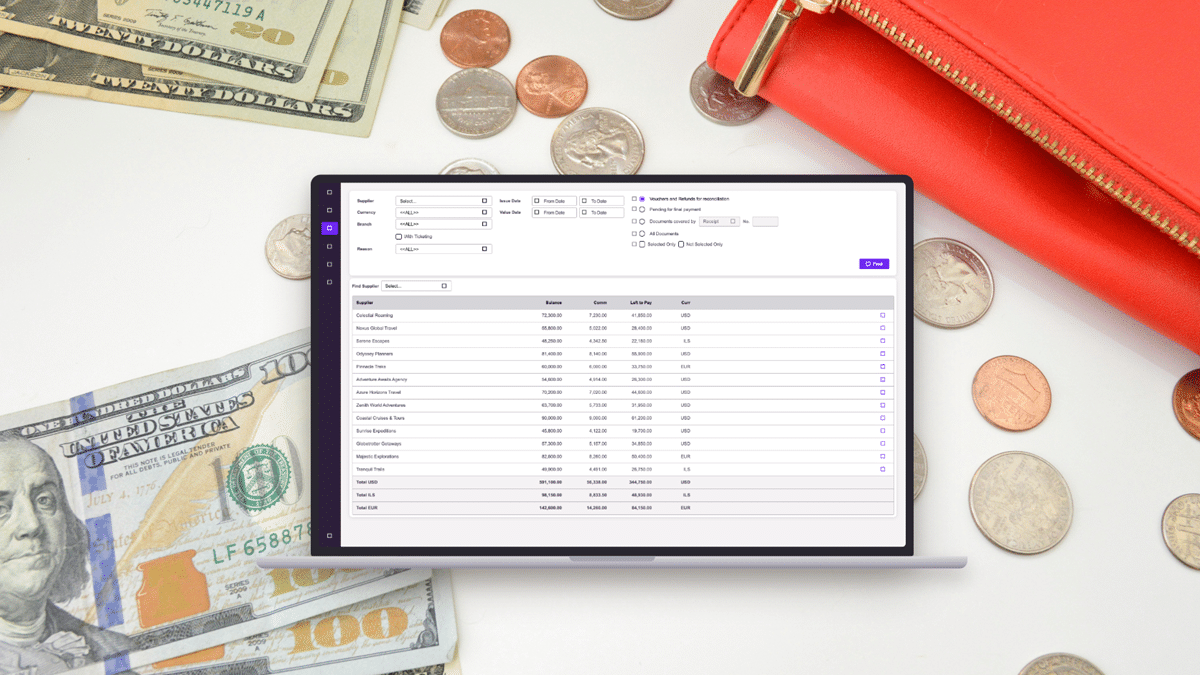
Every month, someone in a travel agency’s finance team opens a spreadsheet, exports last month’s bookings, and starts checking them line by line against a stack of supplier invoices. For a small agency, that might work. For an agency handling hundreds of files a month across hotels, airlines, bed banks, DMCs, and transfer companies, it shortly becomes one of the most expensive tasks in the business. Not because of the hours alone, but because of what slips through: rack rates billed instead of contracted rates, charges for services that were cancelled, and invoices paid twice. This article explains why matching supplier bills is uniquely difficult in travel, where spreadsheets stop working, and how to move to automated matching without losing the history your team depends on.
Key Takeaways
- Travel reconciliation is harder than in most industries because one booking involves many suppliers, changes after the sale, and payments that arrive in parts.
- Three records have to agree: the booking, the supplier invoice, and the payment. Most errors come from one of them changing without the others.
- Spreadsheets break when volume grows, when several people work the same file, and when supplier dispute windows close before month end.
- Automation can clear the routine matches on its own, but price disputes, partial credits, and supplier negotiations still need a person.
- The safest way to switch is in phases: clean supplier data first, run both methods in parallel, then retire the spreadsheet.
Why Supplier Reconciliation Is Harder in Travel Than Anywhere Else
In most businesses, a purchase order goes out, goods arrive, an invoice follows, and the three are matched once. Travel does not work that cleanly. Three structural factors make it different.
Many suppliers per booking. A single package can include a flight, two hotels, airport transfers, a guided tour, and travel insurance, each from a different supplier with its own invoice format, billing cycle, and currency. One customer file can therefore generate five or six separate supplier bills, and each has to be traced back to the right service line.
Changes after the sale. Travelers change dates, add a night, swap a room type, or cancel an excursion. Every change should update what the agency owes the supplier. In practice, the supplier’s system and the agency’s system often record those changes at different times, or not at all. An invoice that reflects the original booking, not the amended one, is one of the most common sources of overpayment.
Payments that arrive in parts. Deposits, balance payments, supplier prepayments, and commission settlements rarely line up one to one with an invoice. A hotel may be paid a deposit on booking and the balance 30 days before arrival, while a DMC invoices after the trip is complete. Add multi-currency billing, and the same service can show three different amounts depending on which exchange rate each system applied.
For agencies that work with dozens of local suppliers, the problem compounds quickly. We covered how that complexity builds on the operations side in How Inbound Tour Operators Manage Complex Supplier Networks.
The 3 Records That Have to Agree
Reconciliation is about confirming that three records tell the same story. When they do, the agency pays exactly what it owes. When they don’t, money leaks.
| Record | What it contains | Where it comes from | Common mismatch |
| The booking | Services sold, dates, passengers, contracted net rate, sell price | Agency booking system or GDS | Amendments not reflected on the supplier side |
| The supplier invoice | Amount billed, service reference, dates, currency, taxes | Supplier (email, PDF, portal, or API) | Rack rate instead of net rate, cancelled services still billed, wrong currency or exchange rate |
| The payment | Amount paid, date, method, reference | Bank, virtual card, or BSP settlement | Duplicate payments, partial payments not linked to an invoice, unrecorded credits |
The invoice is the supplier’s claim. The payment is what actually left the account. The core of reconciliation is matching each supplier invoice against the service amount recorded in the agency’s own system. Only once the two agree should the invoice be approved for payment.
Where Spreadsheet Reconciliation Breaks in Travel Agencies
Spreadsheets are flexible, familiar, and free, which is why so many agencies start there. The problems appear gradually, usually in this order:
- Volume outgrows the method. Matching 50 invoices by hand is tedious. Matching 800 means the work is still unfinished when next month’s invoices arrive.
- Data is re-keyed, and re-keying creates errors. Every booking reference, amount, and date copied from one system into a spreadsheet is a new chance for a typo that hides a real discrepancy.
- Supplier references don’t line up. A hotel invoice might use its own confirmation number, while the agency tracks the booking by file number. Someone has to translate between them manually.
- Month-end timing misses dispute windows. Many suppliers only accept billing disputes for a limited period after the invoice date. If reconciliation happens once a month, errors are often found too late to recover.
- Several people, several versions. When two team members work on copies of the same file, nobody is sure which version is final, and corrections get lost.
- No audit trail. A spreadsheet rarely shows who approved a variance, why, or when. That makes audits slow and fraud harder to detect.
The result is a finance team that spends most of its time finding problems instead of resolving them. It also leaves executives without a reliable view of payables, which is exactly why travel agency CXOs need one financial command center rather than numbers stitched together from separate files.
What Automated Matching Handles, and What It Does Not
Automated matching works by comparing the booking and the invoice against a set of rules, then sorting every line into one of three groups: matched, matched within tolerance, or exception. The goal is not to remove people from the process. It’s to make sure people only look at the lines that need a decision.
What a travel system can handle on its own:
- Matching invoices to bookings by reference, exchange voucher no./ticket no.and amount
- Flagging invoices billed above the contracted net rate
- Applying tolerance rules, such as accepting small rounding or exchange rate differences automatically
- Detecting duplicate invoices
- Identifying charges for services that were cancelled or amended in the booking
- Sending matched entries to the agency’s accounting software for travel agency accounting, without re-keying.
What still needs a person:
- Disputing a price difference with a supplier and deciding whether to accept a revised amount
- Handling goodwill credits, service failures, or no-show charges that depend on context
- Reviewing invoices with missing or ambiguous references
- Approving variances above the agreed tolerance
- Managing supplier relationships where a strict dispute could cost more than the discrepancy.
This split matches what we saw when we looked at what AI can and can’t automate in a travel mid-office: high-volume, rule-based work suits automation, while judgment calls stay with the team. Well-configured supplier invoice matching doesn’t eliminate exceptions. It makes them visible early, while there is still time to act on them.
How to Move Travel Agency Supplier Invoice Operations Off Spreadsheets Without Losing History
Switching methods mid-year can feel risky, especially when open disputes and unpaid invoices are sitting in the old spreadsheets. A phased approach keeps that history intact.
- Audit what you reconcile today. List your suppliers by invoice volume and value, note how each one bills (PDF, portal, API, BSP), and document the tolerance rules your team already applies informally. This becomes the rulebook for the new system.
- Clean the supplier master data. Standardize supplier names, codes, currencies, and payment terms. Most automated matching failures trace back to messy supplier records, not to the matching logic itself.
- Close or carry forward open items. Decide which open disputes and unmatched invoices will be resolved in the old spreadsheet and which will be imported as open balances. Keep the final spreadsheets archived and read-only so the history remains accessible for audits.
- Start with your highest-volume suppliers. Automate the suppliers that generate the most invoices first. This delivers the fastest time savings and gives the team confidence before moving to more complex, lower-volume suppliers.
- Run both methods in parallel for one or two cycles. Compare the system’s results with the manual process. Where they differ, adjust the rules. Our guide to migrating your agency to a mid-office platform explains why parallel running reduces risk during any transition.
- Connect matching to your accounting software. Reconciliation happens in the mid-office, where the booking and supplier data live. The general ledger stays in your accounting software. Once matches are reliable, matched entries flow from one to the other automatically instead of being exported by hand. If you are still choosing accounting software, our list of the 10 best accounting software for travel agencies is a useful starting point.
- Retire the spreadsheet. When exceptions are handled in the system and reports come from the system, the spreadsheet has done its job.
How Travel Booster Supports Supplier Matching
Travel Booster is a mid-office system that sits between the agency’s booking sources (the GDS for airline bookings, bed banks, direct supplier connections and third-party APIs) and its accounting software, handling the bookings, proposals and other operational work in between. That includes reconciling supplier bills, client invoicing, and commission processing, all from the same travel file.
Because the booking, the supplier invoice, and the payment live in one file, reconciliation starts from data that is already connected. Every service carries its supplier, contracted net rate, sell price, and currency. When an invoice arrives, it’s matched against that service line using configurable rules, and variances are flagged for review. Matched entries then flow to the agency’s accounting software, which stays the home of the general ledger. Because amendments and cancellations update the same file, the system knows what the agency should owe at any point, not just what was originally booked. For more on how these pieces fit together, see how a mid-office connects your GDS, CRS, CRM, and accounting system.
FAQ
How long should supplier reconciliation take for travel agencies each month?
With spreadsheets, mid-sized agencies often spend several days a month on reconciliation, sometimes a full week. With automated matching, most of that time shifts from finding discrepancies to resolving them. The routine matches clear on their own, and the team focuses only on exceptions. Many agencies move from a monthly batch to continuous matching as invoices arrive, which spreads the work evenly across the month.
Why do travel agencies consistently overpay suppliers?
Overpayment usually comes from gaps between systems, not from carelessness. Suppliers bill from their own records, which may not reflect amendments, cancellations, or contracted rates stored in the agency’s system. Exchange rate differences, duplicate invoices, and deposits not linked to balances add to the problem. Without systematic checks, small discrepancies are paid automatically because nobody has time to question them.
What match rate is realistic with automation?
It depends on data quality and how well systems are connected. For air tickets, Travel Booster’s match rate against BSP comes close to 100%, thanks to two things: full synchronization between Travel Booster and the GDS, and an advanced BSP matching mechanism developed in-house. Hotels, DMCs and suppliers that send PDFs with inconsistent references produce more exceptions, so the goal there is steady improvement.
Can reconciliation start before the supplier invoice arrives?
Yes. When a booking is confirmed, the system already knows the expected cost, currency, and supplier. That creates an expected payable before any invoice exists. When the invoice arrives, it’s checked against that expectation rather than reviewed from scratch. This approach also helps with cash flow planning, since the agency can forecast what it owes suppliers weeks before bills actually land.
- Share:


Let's go for a journey
More Resources
-
News
-
Blog
-
Blog